Decorative Christmas Tree Redwork: A Practical Design Review
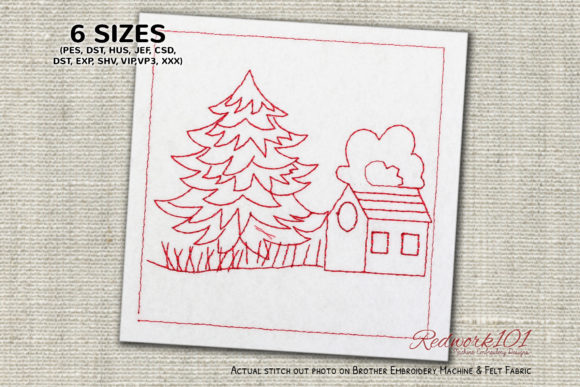
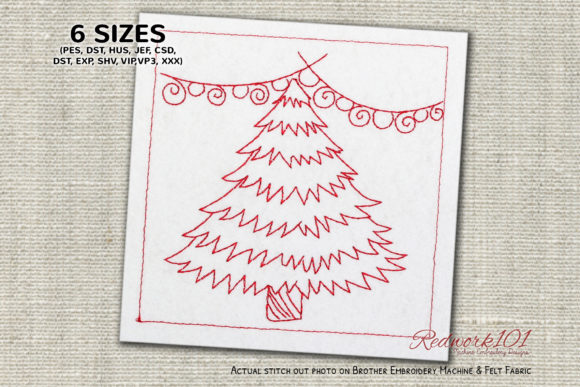
When I first opened the Decorative Christmas Tree Redwork embroidery file, I was immediately struck by its clean, classic simplicity. There’s a certain quiet charm to this design, a nostalgic mood that feels less like a loud holiday advertisement and more like a personal, handmade greeting. Its personality is gentle and inviting, which tells me it belongs on items meant for warmth and personal connection.
Where This Design Finds Its Natural Home
I picture this design on a soft, linen pillow cover for a cozy living room, or neatly stitched onto the corner of a cotton kitchen towel as a festive yet functional gift. The real-life scenario I keep imagining is preparing a custom tote bag for a holiday market. This isn’t a design that screams; it whispers. That makes it perfect for boutique products, personalized gifts, and items where the embroidery is an accent to the overall quality, not the sole focus.
For my craft business or Etsy listings, this design feels like a reliable asset. It would translate beautifully onto sweatshirts for a subtle holiday apparel line, or onto baby items like a blanket corner for a gentle, nursery-friendly Christmas theme. As an embroidered patch, it would be elegant and easy to apply. Its decorative nature means it excels on aprons, pillow covers, and tea towels—items where the stitch work is part of the decor.
The Practicalities of Stitching It Into Reality
In real embroidery work, the success of a design like this hinges on clarity. The open, redwork style suggests good stitch definition, which is crucial for customer trust in a finished product. However, this also means you need to be mindful of your fabric choices. On highly textured fabrics or very thin, stretchy materials, the lines could lose their crispness. A proper stabilizer is non-negotiable here.
For dark fabric backgrounds, thread color contrast becomes paramount. I always advise testing the embroidery file on a scrap of the actual project fabric first. This lets you review the stitch density and inspect how the small details, like the tree’s branches, actually look when stitched out. Does it feel too sparse or appropriately delicate? Your answer will depend on the product’s final use.
Areas for Careful Application
While versatile, this design demands careful consideration in a few key situations. On curved surfaces like caps, the layout might require strategic placement to avoid distortion. If you're working with very small hoop sizes, the detail level needs to be checked—will it remain legible when minimized?
For products destined for frequent washing, like apparel or kitchen linens, the stitch integrity is vital. A well-digitized design with sensible density will hold up, but this is another reason for that preliminary scrap test. Furthermore, for commercial embroidery projects where time is money, a clean, efficient stitch path is ideal. The description notes the optional box stitch, which is a thoughtful touch for flexibility in framing the central motif.
How This Design Elevates Your Finished Product
From a designer’s point of view, the visual appeal of Decorative Christmas Tree Redwork is its understated professionalism. It doesn’t look amateurish or overly busy. This directly impacts perceived product value and handmade presentation. For a small shop product, this consistency in quality helps build brand recognition. A customer receiving this on a holiday gift feels the care in its execution.
Its giftability is high because it’s universally recognizable yet personal. For digital product sellers offering this as part of a bundle, it’s a strong, classic asset that appeals to a wide range of makers. In printable mockups or for a craft fair, it presents as a versatile, trustworthy design.
Essential Notes Before You Hoop Your Fabric
Before running this machine embroidery design for any project—personal or commercial—my routine is always the same. First, I stitch it out. Not just in the intended thread colors, but sometimes in a simple black and white on both light and dark fabric backgrounds to truly understand its form. This reveals any potential issues with tiny elements.
Second, I consider the final product’s scale. Is this for a large, decorative pillow or a small baby bib? The hoop size needs to accommodate the design’s proportions without forcing it. Finally, and this is crucial for creative entrepreneurs and apparel decorators: confirm the licensing. Before selling finished items or using this digital embroidery file in commercial projects, you must understand the terms. The product description provides some flexibility, but clarity on usage rights is the foundation of a professional craft business.
In summary, Decorative Christmas Tree Redwork is a design with a quiet confidence. It’s not trying to do everything, but what it does—providing a classic, decorative holiday motif—it does with a clear and practical elegance. It’s a design that, when stitched with care onto the right product, becomes a subtle testament to quality, elevating both the item it adorns and the skill of the maker who applied it.