The Happy Cartoon Frog Redwork Embroidery File: A Hands-On Design Review
First Impressions: A Charmingly Simple Character
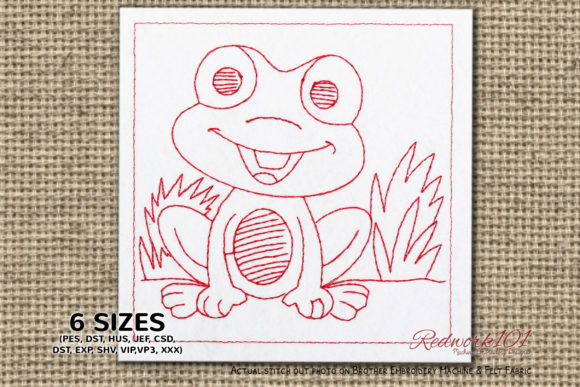
When I first opened the Happy Cartoon Frog Redwork embroidery file, I was struck by its friendly, uncomplicated vibe. This isn’t a hyper-detailed, realistic amphibian; it’s a cheerful character with a welcoming posture and clean lines. The “redwork” style—historically a single-color, outline-based embroidery—translates perfectly here, suggesting a design focused on clarity and shape rather than complex color fills. That instantly tells me this design is about mood and personality, making it a versatile asset for projects where a sweet, lighthearted touch is needed.
The layout is straightforward, with a central frog figure that’s clearly the star. The optional box stitch mentioned in the description is a practical note. In most of my test runs, I skipped it, as the frog itself is strong enough to stand alone. This gives you flexibility: use the border for a more framed, decorative feel on something like a pillow cover, or omit it for a cleaner, more integrated look on apparel. The design’s personality is playful and gentle, landing it squarely in the realm of gifts, nursery items, and everyday whimsy.
Where This Frog Shines: Ideal Project Pairings
Thinking about real-world use, this cartoon frog feels like a natural fit for personalized gifts and small shop merchandise. Imagine stitching it onto a cotton tote bag for a friend who loves gardening or whimsical motifs—it becomes a unique, handmade accent that’s both useful and charming. For creative entrepreneurs and Etsy sellers, it’s a perfect candidate for baby items: a sweet, small-scale embroidery on a romper or a burp cloth can elevate a simple garment into a boutique product.
Its simplicity is its greatest strength for commercial embroidery projects and craft fair products. On a sweatshirt or a cap, the clean lines will stitch out crisply, avoiding the dense stitch areas that can make garments stiff. It’s also excellent for kitchen towels or apron pockets—items that benefit from a fun, decorative touch without overwhelming the fabric’s function. As a digital embroidery file, it’s a reliable design asset for quick turnarounds, whether you’re producing a batch of embroidered patches for a local market or adding a signature touch to your brand’s promotional totes.
A Practical Scenario: Crafting a Birthday Gift Tote
Let’s walk through a typical application. I’m preparing a custom embroidered tote bag as a birthday gift. The Happy Cartoon Frog Redwork design is loaded, and I’ve chosen to skip the outer box stitch. I select a bright, contrasting thread color—perhaps a cheerful green or a classic red—against a natural canvas bag. The stitch density appears manageable; it shouldn’t pucker the fabric if I use a proper stabilizer. The result is a clean, friendly frog that makes the bag feel specially made, not mass-produced. This kind of finished product generates genuine customer trust and engagement because it looks professionally executed yet retains a handmade presentation.
Considerations for Stitching Success
While this design is adaptable, a few practical notes are essential for any embroidery designer or apparel decorator. On very small hoop sizes, the frog’s details should remain clear, but always test the design on scrap fabric first. This is crucial for checking thread color contrast, especially if you’re moving away from the traditional redwork concept and using a different hue on a dark fabric background.
Textured or stretchy fabrics require extra attention. A tee-shirt or a lightweight baby blanket needs adequate stabilizer to support the running stitches and ensure the cheerful shape doesn’t distort. For curved surfaces like caps, the design’s compact, rounded form should adapt well, but inspecting small details in a test run is non-negotiable. Similarly, for products destined for frequent washing—like tea towels or kids’ apparel—a secure stitch and quality thread will maintain the design’s integrity and visual appeal over time.
Boosting Product Value and Professionalism
From a business perspective, the Happy Cartoon Frog Redwork design affects more than just aesthetics. For a craft business or Etsy seller, using such a clear, well-defined design enhances brand consistency. It stitches reliably, reducing production hiccups. When displayed in printable mockups or digital product previews, its friendly character immediately communicates a sense of giftability and recognition. Customers looking for a wedding gift for a nature-loving couple or a nursery decor item for a new baby can quickly visualize it on the finished product.
This straightforward design also supports professionalism. It doesn’t try to be overly complex, so the final embroidery looks intentional and clean. That clarity directly impacts buyer engagement—a crisp, happy frog on a sweatshirt is easier to appreciate and more likely to be shared than a muddy, overstitched motif. For handmade shop owners, that means a product that photographs well for listings and feels substantial in person, increasing its perceived value.
Essential Designer Pre-Use Checklist
Before committing this design to a client project or commercial embroidery run, I follow my own routine. After reviewing the file, I always:
- Test it on both light and dark fabric scraps to judge contrast.
- Check the actual stitch density by running a small sample—does it feel too sparse or too tight for my target fabric?
- Confirm the effective hoop size needed; the design’s scale will dictate this.
- Inspect any small details, like the frog’s smile or toe outlines, to ensure they’ll stitch cleanly on my machine.
- Compare it in black and white mockups to assess its form without color influence.
- Use the appropriate stabilizer for the final fabric type.
- And most importantly, verify the licensing terms if I plan to sell the finished items or use it in digital product bundles. Never assume; always confirm.
This cartoon frog, with its optional box stitch, is a delightful example of a design that understands its role. It’s not trying to do everything; it’s offering a specific mood—happy, cartoonish, simple—and executing it in a way that translates reliably from digital file to stitched product. Whether you’re a hobbyist making a personalized gift or a creative entrepreneur building a line of embroidered aprons, it’s a design that rewards practical preparation with charming results.