A Designer's Take on the Free Flying Dove Embroidery
The Moment You Open the File
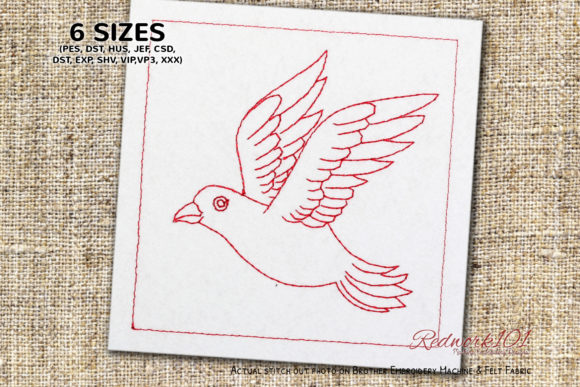
Opening the Free Flying Dove design feels like unlocking a quiet, hopeful moment. The dove’s form is poised—a single, graceful bird captured mid-flight, wings swept upward. Its posture suggests freedom, peace, or a gentle message. This isn't a complex, detailed bird study; it’s a symbol. That’s its strength. The mood is instantly serene, making it a powerful choice for gifts or products that carry emotional weight.
The layout is straightforward, focusing entirely on the bird. The note about the optional box stitch is a practical reminder: the outer border in the preview is likely a guide and not part of the artistic design itself. For most projects, you’ll skip that accent color, leaving just the dove. This simplicity translates beautifully into embroidery. The design’s personality is clean, uncluttered, and universally appealing—a fantastic asset for a craft business or personalized gift line.
Where This Dove Finds Its Wings
In real-life embroidery work, the Free Flying Dove shines on projects where the theme needs to speak softly but clearly. Imagine a client ordering a custom embroidered tote bag as a wedding gift for a couple. This dove, stitched in a soft gray or cream thread on the bag’s corner, becomes a subtle, beautiful emblem. It elevates a simple bag into a meaningful handmade product.
Prime Real Estate for This Design
- Apparel with Purpose: Sweatshirts, t-shirts, or baby clothes for a nursery theme. On a baby’s blanket, it’s a gentle, welcoming touch.
- Home & Gift Items: Pillow covers, tea towels, and aprons for a boutique or Etsy seller. It’s perfect for holiday embroidery aiming for peace and reflection.
- Branding & Patches: As an embroidered patch, it could represent a wellness brand, a community group, or a small shop’s logo. Its clarity makes it excellent for craft fair products.
- Digital Product Value: For digital product sellers, this file is a strong design asset. It’s easily previewed in printable mockups for caps or kitchen towels, helping buyers visualize the final stitch.
Practical Stitching Considerations
While the design feels simple, a professional’s eye looks at execution. The dove’s outline and likely internal detail lines (for wing definition) are crucial. On stretchy fabric like t-shirts, using the proper stabilizer is non-negotiable to keep those graceful lines from distorting.
Be cautious with very small hoop sizes. If you’re thinking of miniaturizing it for a cap’s curved surface or a tiny baby sock, test first. Small details might merge if the stitch density is too high. Similarly, on dark fabric, your thread color choice is paramount. A white dove on a black sweatshirt is striking, but you need excellent contrast and possibly a fill stitch that feels solid.
The design avoids overly dense stitch areas by its nature, which is good for lighter fabrics and products that need frequent washing. Less density means less puckering and a more durable finished product.
A Scenario: The Boutique Kitchen Towel
Let’s walk through a real case. You’re preparing a line of embroidered kitchen towels for your small shop. You load the Free Flying Dove. On a natural linen towel, the dove in a soft blue thread feels fresh and calming. The stitching clarity is excellent—the shape is unmistakable from a distance, which builds customer trust in your handmade presentation. A customer isn’t just buying a towel; they’re buying a feeling. That directly affects product value and buyer engagement. It looks professional and gift-ready.
How This Design Elevates Your Work
Using a design like this consistently across a product line—say, on tote bags, pillows, and aprons—creates a cohesive brand consistency. It becomes recognizable. For an apparel decorator, it offers a quick, beautiful option for clients wanting a symbolic piece without custom illustration fees.
Its visual appeal is in its universality. It doesn’t require explanation. This makes it a safe, yet artistic, choice for commercial embroidery projects where broad appeal is key. It won’t clash with a brand’s other elements; it complements them.
Your Designer Checklist Before Hooping
Before you commit this machine embroidery design to a client’s project or your own merchandise, run through these practical notes:
- Always test on scrap fabric first, especially the final project fabric type.
- Check thread color contrast on both light and dark background mockups.
- Review the stitch density in your software to ensure it suits your fabric weight.
- Confirm the hoop size you intend to use allows all details, like wing tips, to stitch cleanly.
- Inspect how small details render. Stitch a sample and look closely.
- Use the appropriate stabilizer for the fabric texture (linen, cotton, fleece, etc.).
- Crucially, check the licensing of this embroidery file. Verify its terms for both personal and commercial projects before selling finished items or including it in digital product bundles.
The Final Stitch
The Free Flying Dove is more than just a bird in the Birds category. It’s a versatile, emotion-carrying tool for your embroidery toolkit. It fits where you need peace, grace, or a touch of nature. Its success lies in its execution—proper testing, thoughtful fabric pairing, and clear licensing. When stitched well, it transforms a simple embroidery project into a product that feels intentional, professional, and deeply giftable. It’s a design that does its job quietly but powerfully, leaving both the maker and the recipient pleased with the result.